
Act Now: Survey Ends Soon - Be Heard
Bipartisanship Still Lives on Capitol Hill as Congressional Family Business Caucus Finds its Co-Chairs in Rep. Correa and Rep. Tenney
Co-Chairs Vow to Support Policies that Help Family-Owned Businesses; Wealth Tax Mania Continues at Both State and Federal Levels
Some issues can be bipartisan on Capitol Hill. It’s especially good news when it’s about family-owned businesses.
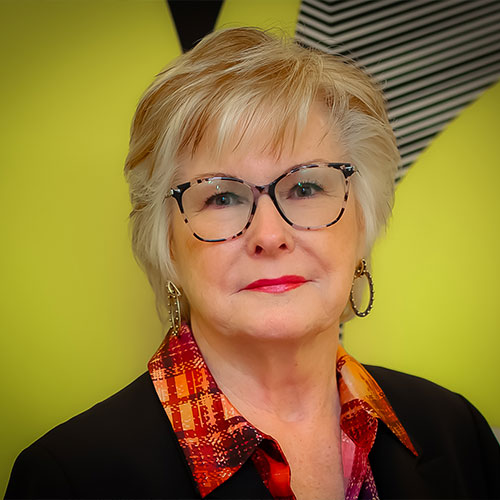
This month, two House of Representatives members, Rep. Lou Correa, a Democrat from Southern California, and Rep. Claudia Tenney, a Republican representing Upstate New York constituents, became the new co-chairs of the bipartisan Congressional Family Business Caucus.
This year’s first Caucus meeting, the first of three where Caucus members, including its new bipartisan co-chairs, joined with leaders from family-owned businesses and family business experts in the Capitol Building’s Visitor Center.
The meeting’s theme was “Pricing and Profits: Affordability Strategies for Family-Owned Businesses.” Attendees heard presentations on new family business research, insights from family businesses, legislative and tax experts, and members of Congress.
If you don’t know the Congressional Family Business Caucus, its mission is to educate and inform legislators on the importance of family-owned businesses to the economy. According to research, America’s family-owned businesses contribute $7.7 trillion annually to the U.S. gross domestic product, accounting for 83.3 million jobs, or 59 percent of the country’s private workforce.
Rep. Tenney, a past co-chair of the Caucus, has represented New York’s upstate districts 24 and 22 since being elected in 2016. Tenney knows about family-owned businesses. She’s an attorney and was the co-owner and legal counsel to Mid-York Press, Inc., a commercial printing and manufacturing firm started by her grandfather in 1946
“Family-owned businesses are the backbone of communities across the country, creating jobs, supporting local economies, and carrying on traditions that span generations,” she said in announcing her co-chair position. “As someone who helped run my family’s business, I understand the unique challenges these businesses face, from rising costs and workforce pressures to complex regulations and tax policy,” she said.
Rep. Correa, also a past member of the Caucus, represents California’s 46th congressional district in Southern California’s Orange County, with the major cities being Anaheim and Santa Ana.
Correa serves on the Committee on Homeland Security and is also keenly aware of the needs of family businesses. Prior to politics, Correa was an investment banker, a real estate broker, and a college instructor.
“Our economy is driven by family businesses whose owners and employees are usually our neighbors,” he said announcing his co-chair role. “My parents worked hard to give me the opportunity to reach the middle class and starting a family business provides the same possibility to millions of Americans,” he added.
Caucus attendees heard from Rep. Tenney and from Caucus member Rep. Dina Titus (D-NV), and they received legislative and political updates by the law and government affairs firm Brownstein. Brownstein experts emphasized the new state and federal wealth tax measures facing family-owned businesses and successful families, as well as housing affordability and wage growth.
They also heard from communications expert and political analyst Dr. Frank Luntz on the increased polarization in the country on the merits of democracy versus capitalism. He also predicted the coming year will continue to see “a war on wealth.”
A panel discussion on affordability consisted of Steve Wells, Co-Founder of American Food and Vending; Matt Nielsen, Shareholder, Nielsen-Massey Vanillas; Eddie Russnow, President, Mac Products, Inc.; Aiysha Johnson, Chief Executive Officer for New Jersey Society of CPA’s; and from David White, President, Superior Paving.
The speakers brought their Main Street views on tackling affordability, including lowering energy costs, creating better efficiencies in operations, inventory, and marketing, and understanding baseline costs.
“Today, you need to understand the major consumer trends since COVID,” said Wells, about his food service business. “Weight loss drugs, people eating less, and the fact people will now spend more to eat less are major factors in our business.”
Nielsen of Nielsen-Massey Vanilla focus was on going to market.
“We’ve always been a high-margin, premium product, but now we’re looking at lower price points using product reformulations,” he said.
Russnow of MAC brought in the issue of timing and negotiating better terms.
“Every day we now look at balancing the timing of purchases and negotiating better payment terms,” he said.
Aiysha Johnson, leader of New Jersey’s Society of CPAs, said “key areas to improve affordability are in technology and operations.” She added that technology can also “see savings in marketing and inventory” costs.
Paving company head David White believes the key to affordability is to know “base line costs” first.
“Most businesses fail because they do not know their baseline costs,” he said. “But also, in our business safety is key to reducing costs, we save a lot of money by making sure our workers get home safely.”
In addition, prior to meetings with House Members in their districts, attendees heard from Sean Aylward, Managing Director of Ernst & Young LLP’s Private Tax and Family Enterprise Business Services, on the “four core strategies” needed for multigenerational business success.
We’re grateful to see bipartisanship has not dead in Washington, D.C. We’re also grateful that the two new Caucus co-chairs, Rep. Tenney and Rep. Correa, are intimately familiar with the struggles and unique challenges faced by family-owned businesses versus traditional corporations.
The next Capitol Hill Congressional Family Business Caucus meetings are scheduled for June 6 and September 23.
‘Wealth Tax’ Fever Grows
Momentum for “Millionaire Wealth Taxes” continues around legislatures, both state and federal.
A new example comes from Sen. Chris Van Hollen (D-MD) who just proposed a plan to eliminate federal income taxes for workers earning at or below a “living wage” (about $46,000 for single filers and $92,000 for married couples). The catch is the plan would offset the resulting revenue loss by imposing a new surtax of 5% on income above $1 million, 10% above $2 million and 12% above $5 million.
Sen. Bernie Sanders’ (I-VT) also has a new federal wealth tax proposal, imposing an annual 5% tax on the net value of a taxpayer’s assets exceeding $1 billion.
Collateral damage is also coming from the looming wealth tax ballot measure in California, which is losing of some of its biggest stars, according to news reports.
A Hoover Institute study found at least six billionaires (including the two Google founders and Steven Spielberg) have left the Golden State before the start of the year, perhaps to avoid the proposed California Billionaire Tax Act.
The ballot initiative, if it gets the signatures, will be voted on later this year. If voters vote yes, it creates a 5% wealth tax on billionaires after January 1, 2026.
If passed, it’s expected a $100 billion windfall for the California treasury, but at a great loss of some of the state’s greatest job and income generators, many of which are family-owned businesses and started in the Golden State.
We hope you’ve enjoyed this article. While you’re here, we have a small favor to ask…
As we prepare for what promises to be a pivotal year for America, we’re asking you to consider becoming a supporter.
The need for fact-based reporting of issues important to family offices and successful families and protecting a lifetime of savings has never been greater. Now more than ever, family offices and successful families are under fire. That’s why Family Enterprise USA Action is passionately working to increase the awareness of issues important to family offices and successful families, while continuing to strengthen our presence on Capitol Hill.
Family Enterprise USA Action engages with legislators on Capitol Hill on behalf of family offices, successful families, and family-owned businesses. It is focused exclusively on the critical tax and economic policies that impact them. Since 1995, FEUSA Action has been the leading advocacy group working daily in Washington, D.C., to reduce and eliminate estate tax, gift tax, and generation skipping transfer tax while blocking increased income and capital gains taxes, the creation of a wealth tax, and other hostile policies that punish hardworking taxpayers and success in the U.S. It is a bipartisan 501.c4 organization.
#incometax #CapitalGainsTax #R&DExpensing #DontPunishSuccess #GrantorTrusts #likeKindExchanges #AcceleratedDepreciation #EstateTax #Deathtax #wealthtax #taxLegislation #incometaxrates #repealestatetax #FamilyOffice #SuccessfulFamilies @PolicyAndTaxationGroup @DitchTheEstateTax #PolicyAndTaxationGroup #DitchTheEstateTax #FamilyEnterpriseUSAAction